How to Choose the Perfect Toilet for Your Melbourne Home (2026 Buyer's Guide)
Introduction: Why the Humble Toilet Deserves More Thought Than You're Giving It
Most Melbourne homeowners spend weeks agonising over tile colour and tapware finish, then grab whatever toilet is on special at the last minute. That's a mistake. Your toilet gets used more than any other fixture in the house — by every member of the household, every single day — and a poor choice shows up fast: weak flushes, constant clogs, water stains that won't scrub off, or a water bill that creeps upward every quarter.
The good news is that choosing well isn't complicated once you know what actually matters. It comes down to four things: how the toilet is built (its configuration), how it flushes, how much water it uses, and whether its shape and size suit your bathroom and your body. This guide breaks down each of those decisions using current Australian standards — including the WELS water rating system regulators use in 2026 — so you can walk into a showroom (or browse online) knowing exactly what to look for.
1. The Four Main Toilet Configurations, Compared
Before you think about brand or colour, decide on the physical layout that suits your plumbing, your space and your budget.
The cistern sits directly on top of the bowl as one connected unit. It's the standard fit-out in most Australian homes because it's affordable, easy to source parts for, and simple for a licensed plumber to install or replace. If you're renovating on a budget or replacing an existing toilet in the same footprint, close-coupled is usually the path of least resistance.
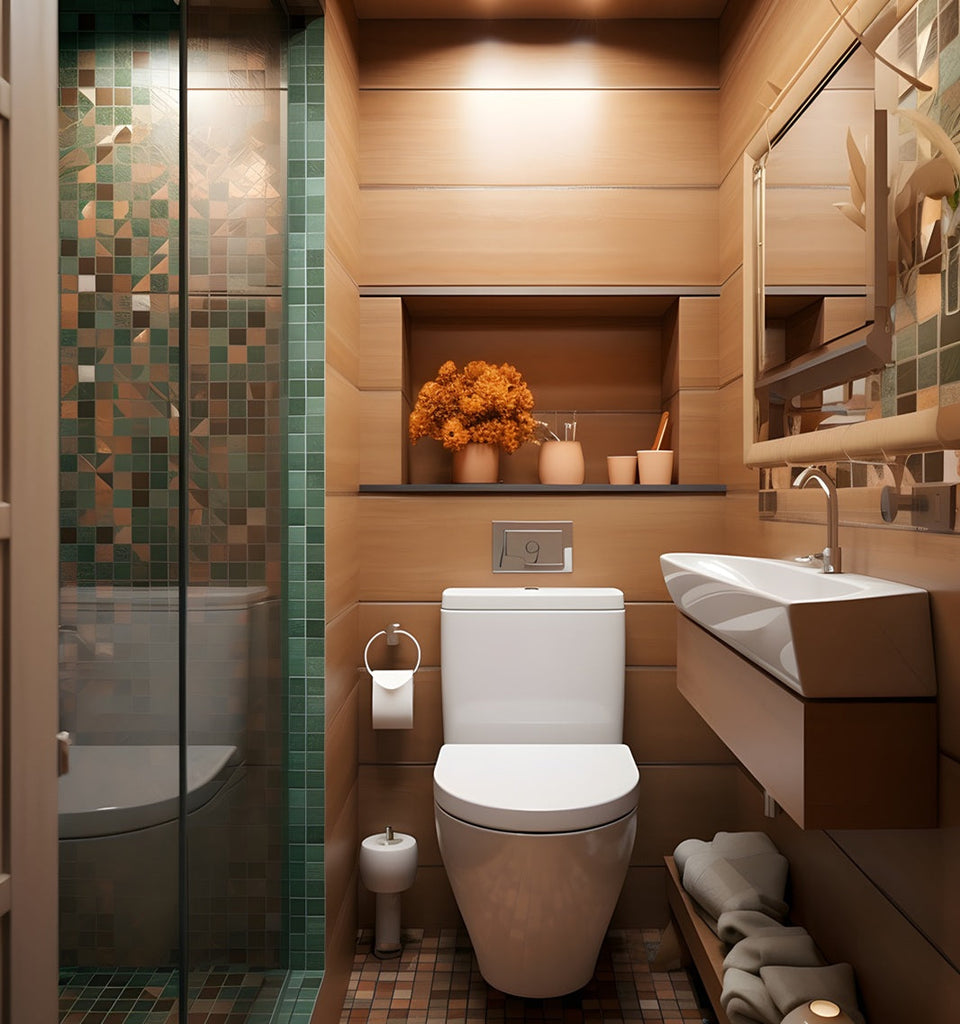
The cistern is hidden inside a false wall (an "in-wall cistern unit"), leaving only the bowl and a flush plate visible. Because there's no pedestal or pipework touching the floor, cleaning is dramatically easier and the whole room reads as more spacious — a big win in the compact ensuites common in Melbourne apartments and townhouses. The trade-off: installation requires building a stud wall or cavity unit, so it's better suited to a full renovation than a like-for-like swap, and the in-wall cistern needs an access panel for future servicing.
A middle ground. The bowl still sits on the floor, but the cistern is concealed — either built into the wall or hidden inside a slimline furniture unit behind the toilet. You get the clean, seamless look of a wall-hung toilet with a simpler (and cheaper) installation, which makes this one of the most requested styles for Melbourne renovations right now.
One-Piece Toilets
Bowl and cistern are moulded as a single ceramic unit with no seams for grime to collect in. They're compact, easy to wipe down, and popular in smaller bathrooms and powder rooms, though the fused design means the whole unit needs replacing if any part fails.
Quick decision guide:
- Renovating on a budget, or a straight swap → Close-coupled
- Small ensuite, want a premium/minimalist look, doing a full reno → Wall-hung
- Want the wall-hung look without a full wall rebuild → Back-to-wall
- Tight powder room, want the easiest possible cleaning → One-piece
2. Flush Technology: What's Actually Happening When You Press the Button
Not all flushes are created equal, and the mechanism affects noise, water use, and how well the bowl stays clean.
Dual flush is now the default in Australia and for good reason: a smaller volume for liquid waste, a larger one for solid waste. This alone can cut a household's toilet water use by more than half compared with an old single-flush unit.
Pressure-assisted flush uses trapped air pressure to drive water through the bowl with more force, which helps prevent clogging in busy households — though it's noisier than a standard gravity system, so it suits family bathrooms better than a bedroom-adjacent ensuite.
Gravity flush is the traditional method: water simply drops from the cistern into the bowl under gravity. It's quiet, mechanically simple, and cheap to maintain, which is why most dual-flush toilets sold in Australia today are still gravity-based.
Rimless bowl design is the standout innovation worth specifically asking for in 2026. Traditional toilets have a rim around the inside edge of the bowl that harbours bacteria and grime out of easy reach of a brush. Rimless toilets direct the flush water around the bowl in a more open, targeted pattern, meaning there's no hidden rim to scrub — a genuine hygiene and cleaning-time upgrade, not just marketing language.
Talking point for the showroom: Ask specifically whether a model is rimless and dual-flush. Combined, these two features do more for day-to-day comfort and cleaning time than almost any other spec on the sheet.
3. WELS Ratings: The Number That Actually Affects Your Water Bill
Water efficiency isn't just a nice-to-have in Melbourne — it's a legal requirement and a genuine cost factor, especially with Melbourne's water retailers (Yarra Valley Water, South East Water and Greater Western Water) periodically flagging summer water restrictions.
Every toilet legally sold in Australia must be tested and labelled under the Water Efficiency Labelling and Standards (WELS) scheme, a mandatory federal program administered by the Australian Government. Here's what the label tells you:
- Star rating (1–5 stars for toilets): More stars means less water used per flush. The current legal minimum for a toilet sold in Australia is 3 stars.
- Average flush volume, in litres: This is calculated as one full flush plus four half-flushes, averaged out. To be WELS-compliant, that average cannot exceed 5.5 litres.
- Licence and registration number: Confirms the toilet has actually been independently tested rather than self-certified.
Why this matters in real terms: an old single-flush toilet can use around 12 litres per flush. A modern 4-star dual-flush toilet uses roughly 3.5 litres on average. According to the Australian Government's own household water efficiency guidance, replacing an old single-flush toilet with a 4-star model can save a typical household in the order of 50,000 litres and around $148 a year on water bills — and every extra litre saved per flush saves a family of four roughly $17.50 annually in water charges alone.
What to look for: aim for 4 stars or higher where your budget allows. It's a one-time decision at purchase that keeps paying you back every single flush for the next 15–20 years.
4. Comfort, Size and Shape: Getting the Fit Right for Your Bathroom
A toilet that looks great in a showroom can feel completely wrong at home if the proportions don't suit the room or the people using it.
- Bowl shape: Elongated bowls are generally more comfortable for adults and are the standard choice for main bathrooms. Round bowls take up noticeably less floor space, which makes them a smart pick for small ensuites, powder rooms, or anywhere clearance is tight.
- Seat height: Standard height suits most adults and children. "Comfort height" or "raised height" models (roughly chair height) are worth considering for elderly household members or anyone with mobility or joint concerns, as they reduce strain on the knees when sitting or standing.
- Rough-in and clearance: Before falling in love with a specific model, check the rough-in measurement (the distance from the finished wall to the centre of the waste outlet) against your existing plumbing, and confirm there's enough clear floor space in front of and beside the bowl for comfortable use — a detail an experienced plumber or bathroom consultant will check for you.
5. Noise, Cleaning and Everyday Livability
These are the practical, lived-with details that rarely make it onto a spec sheet but make the biggest difference to daily comfort.
- Noise: If the toilet backs onto a bedroom, living area, or a wall shared with a nursery, a gravity-fed dual-flush system will run noticeably quieter than a pressure-assisted one.
- Surface finish: Look for a smooth, glazed ceramic finish (sometimes marketed as an antibacterial or easy-clean glaze) that resists grime buildup and makes routine cleaning faster.
- Rimless design (covered above) removes the single hardest-to-clean part of a traditional toilet.
- Wall-hung and back-to-wall models have no exposed pedestal, pipework or awkward corners at floor level, cutting cleaning time considerably compared with a traditional close-coupled unit.
6. Matching Your Toilet to Melbourne's Bathroom Design Trends
Melbourne homeowners tend to blend clean, contemporary lines with the occasional classic or heritage touch, particularly in period homes across the inner suburbs. A few pointers for getting the aesthetic right:
- Traditional homes (Victorian, Edwardian, California bungalow): A close-coupled toilet with classic detailing suits the era better than an ultra-minimal wall-hung unit, unless you're going for a deliberate old-meets-new contrast.
- Modern renovations and new builds: Back-to-wall and wall-hung toilets in matte white or matte black are currently the most requested finish across Melbourne renovations, pairing well with matte-black tapware and large-format tiles.
- Colour and finish: Gloss white remains the safe, timeless choice; matte finishes are trending for 2026 and are genuinely easier to keep looking clean, since they show fewer water spots and fingerprints than high-gloss ceramic.
- Cohesion: Match your toilet's lines and finish to your vanity, tapware and tiles rather than choosing it in isolation — this is the single biggest factor in whether a bathroom reads as "designed" versus "assembled."
7. Installation and Ongoing Maintenance
Installation: Always use a licensed plumber for toilet installation in Victoria — it's a legal requirement for connecting to sewer and water supply, and it protects your manufacturer's warranty. Wall-hung and back-to-wall toilets in particular need the in-wall cistern frame installed correctly the first time, since fixing a leak behind tiled walls later is far more disruptive (and expensive) than getting it right during the reno.
Maintenance tips:
- Clean with a non-abrasive bathroom cleaner to protect the glaze.
- Test dual-flush buttons periodically — a sticking half-flush button is one of the most common (and most overlooked) causes of a slowly rising water bill.
- For smart or high-tech toilets with heated seats, bidet functions or remote controls, always follow the manufacturer's care instructions, and keep the unit's electrical connection clear of water exposure.
- Book an annual plumbing check if your toilet is older than 10 years — cisterns, seals and inlet valves degrade slowly and often start wasting water long before a leak becomes visible.
Conclusion: Choosing With Confidence
The right toilet for your Melbourne home comes down to matching four things to your household: the configuration that suits your space and budget, a flush system that's efficient and low-maintenance, a WELS rating that keeps your water bill in check, and a shape and finish that fits the rest of your bathroom. Get those four right, and you'll have a fixture that performs quietly and reliably for well over a decade — not just something that looks good on installation day.
At Kalessi Bathroom and Tiles, we stock a curated range of WELS-rated, dual-flush toilets across close-coupled, wall-hung, back-to-wall and one-piece styles, from trusted brands built for Australian conditions. Visit our Melbourne showroom or call our team today to see finishes in person and get tailored advice for your renovation or new build.
Frequently Asked Questions
What is the best WELS star rating for a toilet in Melbourne?
Aim for 4 stars or higher. The Australian legal minimum is 3 stars, but a 4-star dual-flush toilet uses roughly 3.5 litres per average flush versus around 12 litres for an old single-flush model, which typically saves a household in the order of $148 or more per year on water bills.
Wall-hung or close-coupled — which toilet should I choose?
Choose wall-hung if you're doing a full renovation, want a minimalist look, and value easier cleaning. Choose close-coupled if you're on a tighter budget, replacing an existing toilet in the same spot, or want the simplest possible installation.
How much does it cost to install a new toilet in Melbourne?
Costs vary by configuration, plumbing complexity and brand, but close-coupled toilets are generally the most affordable to supply and install, while wall-hung toilets cost more upfront due to the in-wall cistern unit and any wall-framing work required. Speak to our team for a tailored quote based on your bathroom layout.
Do all toilets sold in Australia need a WELS label?
Yes. Under the mandatory Water Efficiency Labelling and Standards scheme, every toilet legally supplied in Australia must be tested, registered and labelled with a WELS star rating and average flush volume before sale.
What does "rimless" mean on a toilet, and is it worth paying extra for?
A rimless toilet has no hidden rim around the inside of the bowl for the flush water to hide grime under. Water is directed around the bowl in a more open pattern, making the toilet noticeably easier and faster to keep clean — a worthwhile upgrade for most households.
Can I install a wall-hung toilet in an existing bathroom, or only during a full renovation?
Wall-hung toilets can technically be retrofitted, but because the cistern needs to sit inside a stud wall or cavity unit, it's almost always more cost-effective and less disruptive to install one during a full bathroom renovation rather than as a standalone swap.
Related post
29
Jul
28
Jul
27
Jul
22
Jul