The Complete Guide to Laundry Cabinets: Transform Your Laundry Space
Washing day is chaotic enough without hunting through half-empty bottles and pulling towels out of random cupboards. A good laundry cabinet fixes this. We've watched countless customers at Kalessi go from "where did I put that stain remover?" to having everything where it actually belongs. It's genuinely one of those small changes that makes laundry day slightly less annoying.
What Is a Laundry Cabinet and Why You Need One
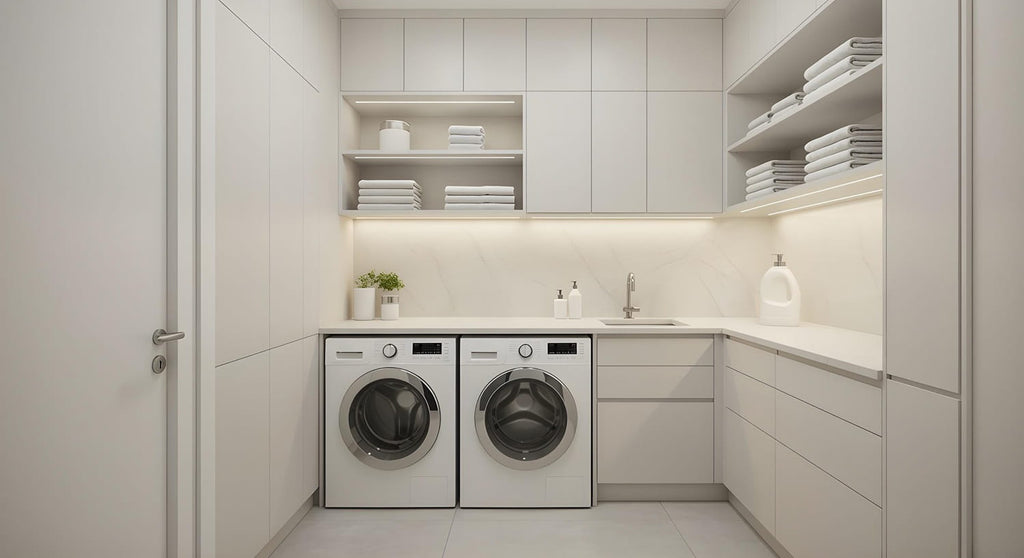
A laundry cabinet is basically a cupboard built specifically for laundry rooms and bathrooms. It stores cleaning supplies, detergents, and everything else that doesn't belong on open shelves. Unlike your standard kitchen cupboard, these cabinets are designed to handle moisture, they have decent ventilation, and the shelves are sized for bottles rather than plates.
Why bother getting one? Without proper storage, your bottles leak on other stuff, sunlight degrades products, and you forget half of what you own. Everything ends up scattered around the bathroom or laundry. A cabinet gives everything a home. You know where things are, products last longer, and the space looks tidier.
Types of Laundry Cabinets Available
- Laundry Trough LT-370
- Laundry Trough LT-370P
- Everhart Laundry tub and metal cabinet 35L
- Compact Laundry Tub YH 235L-3
- LAUNDRY TUB
- HAMPSHIRE LAUNDRY 415 BLACK BASE CABINET
- HAMPSHIRE LAUNDRY 415 BLACK WALL CABINET
- NOOSA WHITE LAUNDRY KIT 1305X600X2100
- NOOSA WHITE MINI LAUNDRY
- HAMPSHIRE LAUNDRY 415 WHITE BASE CABINET
- NOOSA LAUNDRY 415 FLUTED WHITE WALL CABINET
- More
Materials That Last: What Actually Works
The material you choose determines whether your cabinet falls apart in 5 years or lasts 15.
Engineered wood and MDF are budget options. They're light, available in heaps of colours, and cost less. The catch is they absorb moisture. In humid Australian laundries, they swell and sometimes warp. If you go this route, get water-resistant versions and don't ignore spills.
Solid timber is more durable. Hardwoods like oak resist moisture better. They also look nicer and develop character—not the fake finish peeling off kind, but actual grain showing up over time. You'll pay more, and you need to maintain the finish if the humidity's high, but it lasts.
Stainless steel handles moisture brilliantly. There's basically no maintenance—wipe it down, move on. It's hygienic and suited to modern spaces. The downside is the industrial look isn't for everyone, though it's become increasingly popular.
Laminate and melamine sit between timber and engineered wood. Quality laminates look decent, resist stains, and handle moisture reasonably well. Melamine is cheaper but less durable. Both are easy to clean.
Storage Solutions and Organisation Inside Your Cabinet
The internal layout matters just as much as the cabinet itself. Bad organisation means you can't find anything.
Adjustable shelves are genuinely useful. Your product mix changes—some months you're buying powder detergent, other months just liquids. Shelves that move let you reconfigure without buying a new cabinet.
Pull-out drawers and baskets help you actually reach things at the back without performing yoga. Rollout systems work particularly well for smaller items like stain sticks or lint rollers. Basic tip: if you can't reach it easily, you won't use it.
Clear containers and dividers prevent bottles rolling around and spilling everywhere. Stainless steel dividers keep bottles upright and protect the cabinet. Label containers so everyone knows what's inside without opening each one.
Ventilation is worth having. Laundries are damp. Cabinets without airflow get musty and sometimes develop mould. Some cabinets include louvred doors or small vents. It's not essential but honestly makes a difference.
Use the inside of cabinet doors for extra storage. Small pockets or shelves hold spray bottles and cloths without taking up shelf space. It's one of those clever uses of space that seems obvious once you notice it.
Choosing the Right Size for Your Space
Get the size wrong and you've wasted money. Get it right and the cabinet becomes invisible—it just works.
First step: actually measure. Height, width, depth. Account for door swing. Nothing worse than a cabinet that's perfect except the doors won't open properly. If your space is tight, narrow and tall often beats wide and shallow.
Think about what you're storing. Do you have heaps of bottles? Bulk boxes of powder? Seasonal items you only use in summer? If you feel like you're drowning in supplies now, a single cabinet is a starting point, not a full solution. You can add another unit later.
Look forward a bit too. If you're thinking about switching to refillable bottles or you've got kids whose laundry products are about to multiply, go slightly larger now. It's better than feeling cramped six months in.
Installation and Setup
How hard is installation depends entirely on what you're installing.
Freestanding units are dead simple—position them and load them. Wall-mounted cabinets need you to find the studs and use proper fasteners. This is genuinely important. Bad installation = wobbling cabinet = safety issue. If you're confident finding studs and using a drill, go for it. If not, get a handyperson. It's not worth a wobbly cabinet above your head.
Under-counter units sometimes need plumbing work if you're fitting them around pipes. That's when you call a plumber. Don't hack around pipes yourself unless you know exactly what you're doing.
Basic rule: read the instructions first. Gather everything before you start. Take your time. Getting it right the first time beats rushing and having to redo it.
Maintenance and Care Tips
A decent cabinet needs minimal looking after.
Wipe down the inside occasionally with a dry cloth. If you notice moisture building up, improve ventilation. Check hinges and seals every few months and tighten anything loose. For timber cabinets in humid spaces, apply a protective finish once a year.
Keep things sealed properly. Heavy stuff goes on lower shelves. If something spills, clean it immediately before it stains. Don't overload shelves—yes, it's tempting to cram everything in, but that stresses hinges and warps shelves.
Explore the Ultimate Bathroom Showroom Experience in Melbourne
How to Choose the Right Laundry Cabinet for Your Home
Start with measurements. Write them down. Visit showrooms and actually look at options. Photos lie about finishes and build quality.
Match your space style. Modern bathrooms look good with sleek minimalist cabinets. Traditional spaces work better with timber. Neither is wrong—it just matters that you like it.
Think about your situation. Kids in the house? Durability beats looks. Store heaps of bottles? You need bigger shelves. Refillable bottles? Plan for that.
Check the actual cabinet. Open drawers and test hinges. Look at shelf thickness. Is the back panel solid or flimsy? Better construction lasts longer.
If buying online, read reviews. Ignore the "best cabinet ever!" reviews and the "worst thing I bought" reviews. Focus on patterns—what keeps coming up? Moisture issues? Hinges failing? That tells you something.
Current Trends in Laundry Storage
Minimalist designs with clean lines are popular right now. People like things looking less cluttered. Hidden handles rather than big chunky ones.
Sustainable materials are getting more attention. FSC-certified timber, recycled wood, non-toxic finishes. It matters to some people and costs a bit more.
Built-in organisation systems appeal to people who want everything sorted before they even start loading. Dividers, pull-out systems, labelled sections. Takes the guesswork out.
Open shelving is coming back for people confident their products look good and like easier access. It requires more discipline to keep tidy but looks cleaner.
Combo units that do double duty—laundry storage plus a hamper, or shelving plus a drying rack—are useful in homes without dedicated laundry rooms.
Common Mistakes to Avoid
Not measuring before buying is the biggest one. You can't return a cabinet that's half a centimetre too wide.
Ignoring moisture is costly. Laundries are damp. Picking materials that don't handle it means your cabinet falls apart in a few years.
Skipping proper wall mounting is a safety issue. This isn't something to cheap out on.
Overloading shelves stresses everything and shortens the cabinet's life. Respect the weight limits.
Assuming one size fits all rooms. What works in a spacious laundry might overwhelm a small bathroom. Think it through.
FAQs About Laundry Cabinets
How much weight can shelves actually hold?
Depends on the cabinet. Most decent ones handle 20–30 kg per shelf. Premium options more. Check the specs and distribute weight evenly rather than piling everything on one shelf.
Can I use a regular bathroom cabinet for laundry?
Technically yes. Laundry cabinets are just designed specifically for moisture and cleaning product exposure. They usually have better ventilation. A regular cabinet works but probably won't last as long.
Do I need ventilation?
In humid climates or poorly ventilated spaces, it helps. Stops mustiness and mould. Not absolutely essential but worth having.
Best way to organise the inside?
Group similar things. Keep what you use most at eye level. Heavy stuff down low. Use containers so you know what's inside. Label things. That's basically it.
How do I stop spills?
Use containers with proper lids. Keep bottles upright. Stainless steel trays or mats under anything that might leak. Check seals regularly. Clean spills immediately.
How long do they last?
A well-built cabinet, properly installed and looked after, lasts 10–15 years. High-end timber options sometimes 20+. Budget units might need replacing in 5–7 years.
Conclusion: Transform Your Laundry Space Today
Laundry doesn't have to mean chaos. A decent cabinet keeps everything organised, products last longer, and you actually know what you've got.
Whether you've got a big dedicated laundry or you're fitting storage into a bathroom corner, there's something that works. At Kalessi, we stock laundry cabinets in different sizes and materials. Come in and see them, or ask our team what suits your space. We've helped heaps of customers sort their laundry situations and can point you toward what actually works.
Related post
29
Jul
28
Jul
27
Jul
22
Jul